How to Actually Say You’re Sorry: A Guide to Repairing After Conflict

You know that moment after an argument with your partner when things are technically fine, but don’t actually feel fine? You both move on, maybe even say sorry, but something still feels off, like the conversation ended but the feelings didn’t.
As a Utah couples therapist, I frequently hear the desire to know how to say you’re sorry, to actually feel better after an argument. Every couple has hard, uncomfortable moments, where things are said, or unsaid, and each partner is unintentionally hurt by the other. Even healthy and secure couples have hard moments. Conflict is normal.
Susan Johnson, the creator of Emotion Focused Therapy (EFT) for couples, explains that actual forgiveness, repairment, happens when the emotional part of the wound is taken care of, bringing back trust . So it is not just about the words we say, but making sure we understand and speak to the emotion.
Healing the hurt after an argument often happens through a series of steps that help both partners feel understood and reconnected. These five steps explore that process, along with the important role each partner plays in repair.
Step 1: Deescalate and Regulate

The Partner Who Was Hurt
Wait for the escalation to calm down so the conversation for repairing does not happen when someone is flooded. Ask to take a breather and agree to come back to each other at a certain time.
It is still okay to feel some emotions, like sadness or concern, but we do not want to get caught up in explosive or shut down emotions.
The Partner Who Caused the Hurt
When your partner asks for space, your role is to honor that request and agree on a clear time to come back together. This helps both of you know the conversation isn’t being avoided or pushed aside.
Even if it feels uncomfortable to pause, sticking to the agreed time shows care, reliability, and respect. Following through in this way helps rebuild a sense of safety and makes it easier for both of you to return ready to repair.
Step 2: Share Vulnerability

The Partner Who Was Hurt
When you come back together and feel more settled, share your vulnerability. It can feel really hard to take the risk to share something personal, especially with someone you care about deeply and want to feel seen by.
You do not want to use blaming language like:
“You never listen to me!”
or
“You always forget this thing! You don’t care!”
This creates a defensive or shut down response from your partner. Your role is not to prove where they went wrong, but to help them understand what it felt like to be you in that moment.
Instead, use “I statements” and express the deeper emotion beneath the anger or frustration. For example:
“I felt hurt when I felt I was not being heard.”
or
“I was afraid that I would be alone in this situation.”
When you share the deeper emotion and the impact it had on you, it creates a more open and meaningful conversation. It also helps your partner better understand your experience.
The Partner Who Caused the Hurt
Your role in this moment is to just listen to what your partner is saying to you.
You most likely will want to explain yourself, to explain that it was not your intention to hurt your partner, to clarify what "actually happened”, that if they just knew that then it would be better. And that can all be true, but that is not what is needed at this moment.
Do not interrupt or correct. Just listen as they try to find their words to express their vulnerability.
Step 3: Validate and Take Accountability

The Partner Who Caused the Hurt
After listening to your partner express their hurt and their experience, your next step is to validate and take accountability for the impact your part played in the argument. Validating means letting them know their feelings make sense and that it’s okay for them to feel that way.
When you are validating, how you say things matter. Use a tone of voice that is softer, empathetic, and with love. Even if you say the same words, how you say them is what sends the message “I am here with you and what you say matters to me”. If you use a cold, short, or sarcastic tone, it sends the message that “I do not care”.
If you have a hard time understanding or validating their experience, stay curious. Ask questions and learn more about what it was like for them. Then return to listening. Keep going until you can truly understand their hurt..
When you understand their experience and their hurt, take accountability. This means clearly acknowledging that what you said or did had an impact. You are showing, “I see you and I see that what I said or did impacted you in that way”.
This is where you express remorse. If your partner cannot see that their pain matters to you, it can feel like you do not care.
Taking accountability does not mean you’re a bad person or that you need to respond with shame. You may have had good intentions, and you can still acknowledge the hurt your actions caused. Both can be true at the same time.
There is a difference between:
“I am sorry you felt that way” or “I am so sorry that I am the worst”
and
“I can see what I did or said hurt you, and I am so sorry”.
Remember to continue to use your soft and loving tone instead of being cold or shut off.
The Partner Who Was Hurt
As your partner works to validate and take accountability, your role is to stay open to receiving it. This can be hard, especially if you are still feeling hurt or unsure.
As they ask questions or try to understand, you can offer clarification to help them see your experience more clearly. This is part of the process of learning about each other more deeply. You can stay connected to your feelings while also allowing space for their effort, even if it is not perfect.
Step 4: Express the Need That Was Missed
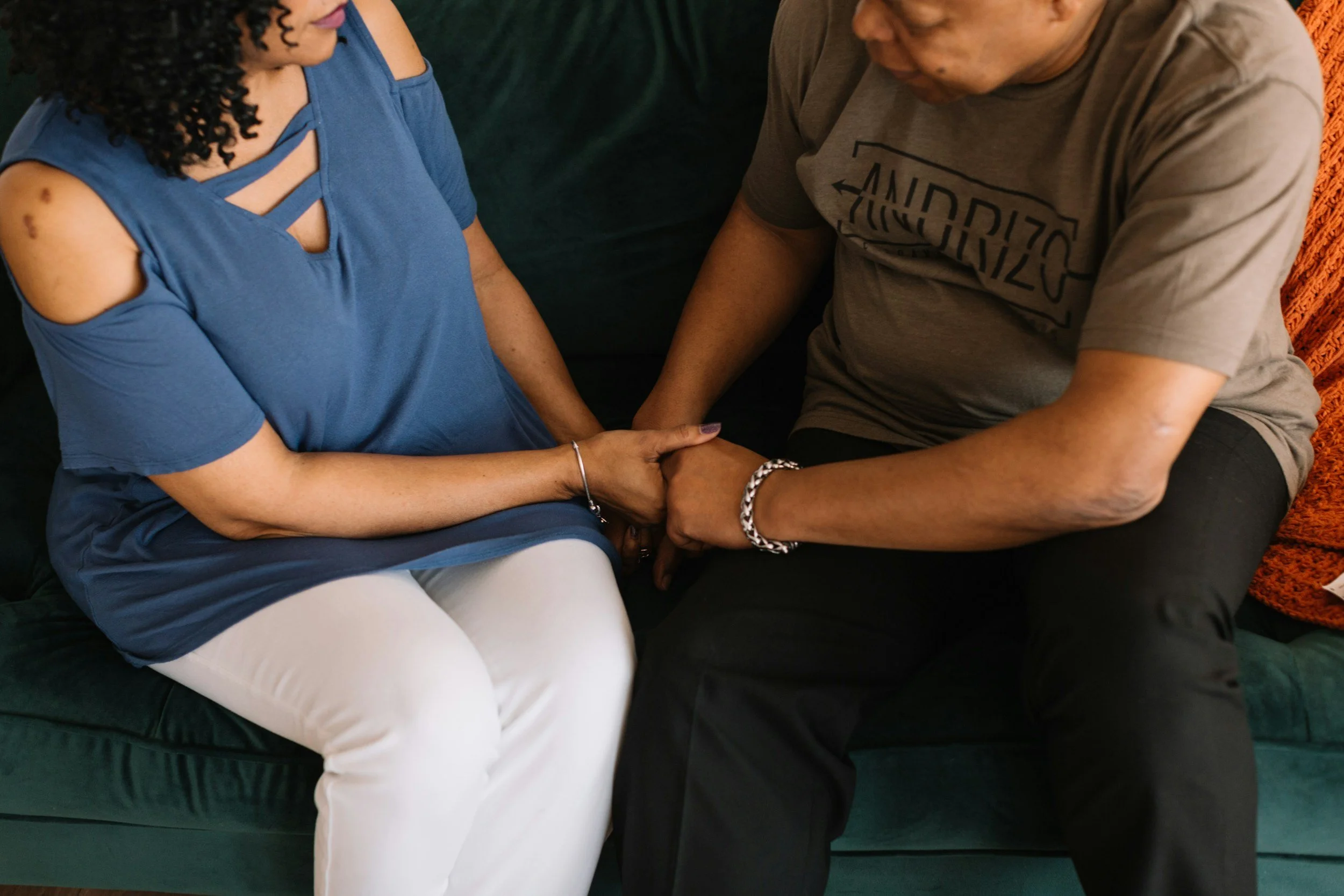
The Partner Who Was Hurt
After your partner has listened to you, made sure they understood your experience and took accountability for the hurt that was caused, your next step is to then take another risk and ask for your need that was missed .
The hurt you experienced came because your partner missed something you needed. This does not make them a bad partner for missing it. All couples miss signals in the relationship. This also doesn’t take away the hurt that was caused.
Sometimes it can be hard to identify and name what that need is. If you find yourself unsure, here are some common needs that might help you put words to what was missing:
I needed to be reassured (that I and our relationship matter)
I needed comfort (are you there for me)
I needed security (to know that you won’t leave me)
I needed to feel loved (that you care for me)
Once you are able to name what was missed, continue to be vulnerable and ask for the need to be met again.
“Can you please reassure me that I matter to you in this situation?”
“Can you comfort me right now? I’m feeling really overwhelmed.”
“Can you tell me that we’re going to get through this together?”
“I need to feel loved in this moment. Can you help me with that?”
Sometimes this can feel really uncomfortable. You might start to feel like you are needy, weak, or too much for asking for you need in such a clear way. Sometimes there’s an expectation for your partner to just know — because “if they knew or loved me enough they would know”. These are relationship myths.
In a secure relationship, these needs are shared out loud. Your partner cannot read your mind. And you deserve to have your needs met. When you are able to express your needs clearly, it helps your partner understand you better and leaves less room for miscommunication.
The Partner Who Caused Hurt
As your partner shares the need that was missed, your role is to stay present and continue listening. It can be easy to feel pressure to respond right away or to explain yourself, but this moment is about clearly hearing what they are asking for.
Focus on their words and the need they are expressing, without jumping ahead or filling in the gaps. Your steady attention helps your partner feel safe enough to keep being vulnerable and makes it clearer how you can respond with care.
Step 5: Respond To The Need

The Partner Who Caused the Hurt
When your partner has finished expressing their need, follow through with the apology and respond to their need with care, using a soft and empathetic tone of voice.
“I can see that when I said or did that, you felt afraid that you would be alone in the situation. You wanted to know that you mattered to me. I am so sorry that you felt alone. You do matter to me so much and I am so sorry that you couldn’t see that in that moment.”
The Partner Who Was Hurt
As your partner responds to your need, your role is to take in what they are offering and notice what it feels like to be met in this way. This can be a meaningful moment. Allow yourself to receive their care and let it land.
If the response meets your need, you can share that with them, helping close the loop and reinforce the connection. If something still feels unfinished, you can gently name what’s still needed.
Repair is not about perfection, but about feeling seen, valued, and reconnected.This is the moment where that healing can start to settle in.
If both partners were hurt, you will move through the steps together with one person in each role. Once you complete the process, check in and then switch roles so each person has a chance to share their experience and be heard.
Final Thoughts

If it feels like these five steps are a lot of work, they are. To fully repair takes time, effort, energy, and patience. However, the more you practice these steps and skills, the process will become more familiar to you and easier to move through.
Research has shown that when couples can move through all of these steps, they feel closer and deeply connected, and the issue feels resolved.
Uncomfortable and hard moments will always exist within relationships, but it is the process of coming back to your partner and fully repairing that creates a healthy and safe relationship.
If you find yourself needing more support as you work through these steps, you are not alone. It can be hard to move away from shame, to stay present in vulnerable moments, or to find the words to express what you’re feeling. Sometimes the hurt feels too big, or the patterns feel too stuck, to fully repair in one conversation.
Couples therapy can offer a steady, supportive space to slow things down and work through these moments together. At Wasatch Family Therapy, we help couples understand each other more deeply, communicate needs more clearly, and move through conflict in a way that builds connection instead of distance.
If you’re ready for more support, we invite you to reach out and schedule an appointment. You don’t have to figure this out on your own. With the right support, repair becomes more possible, and your relationship can begin to feel like a safe place again.