What Actually Happens in a Play Therapy Session?
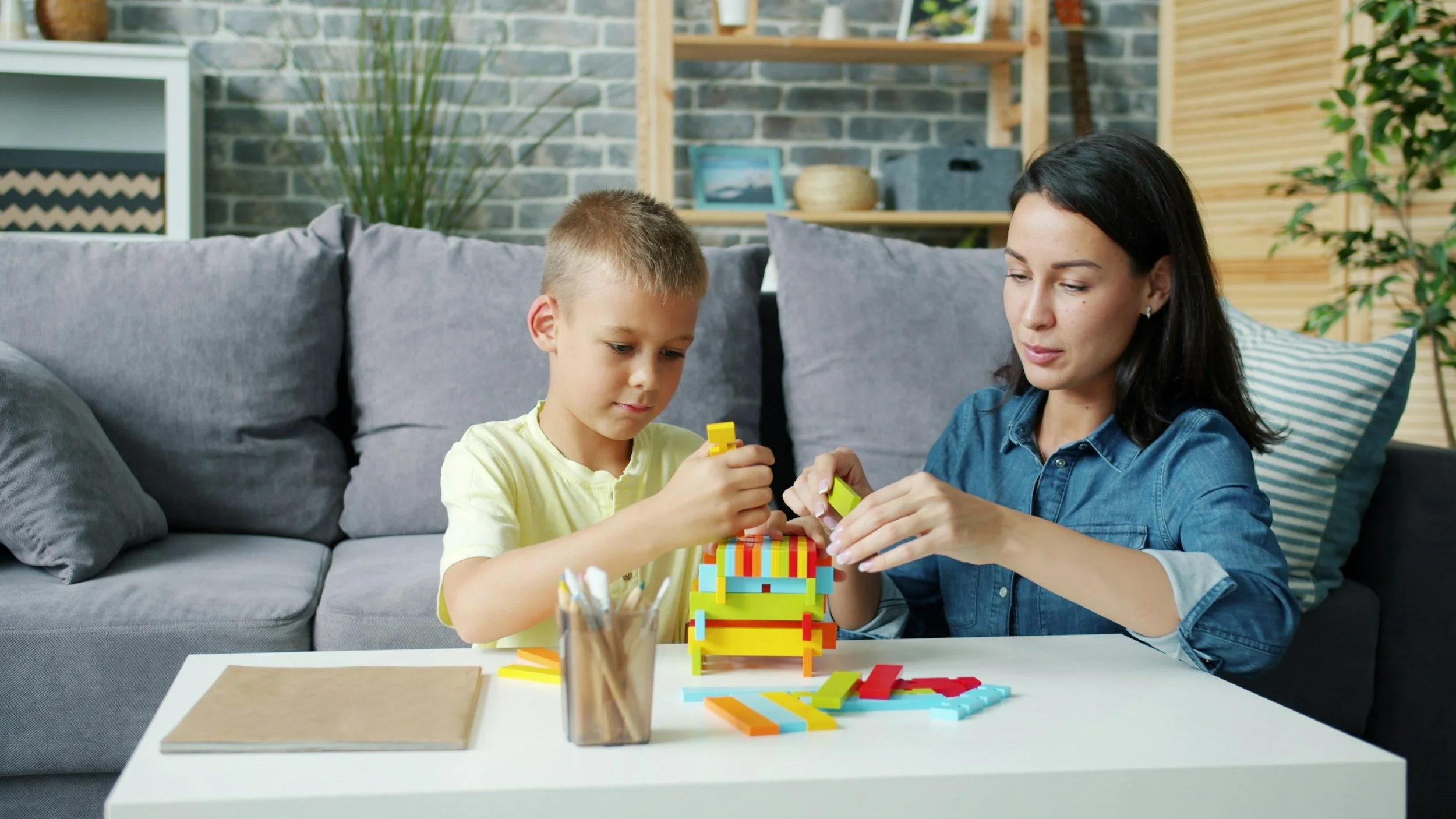
If you’ve ever considered play therapy for your child, you may have found yourself wondering what actually happens in the therapy room. Do children just play with toys? How does play help them heal, grow, and express their emotions?
These are common and important questions for parents seeking support. Understanding what to expect can bring clarity, comfort, and confidence as you take the next step toward helping your child thrive.
What Is Play Therapy?

Play therapy is a developmentally appropriate form of counseling that helps children express thoughts and emotions through play rather than words.
Ok… but what does that mean?
Children’s brains are still developing, especially the parts responsible for language, emotional regulation, and abstract thinking. Because of this, they often don’t yet have the ability to fully explain what they’re feeling or even understand it themselves.
When a child is overwhelmed, anxious, frustrated, or confused, asking them to “just talk about it” can feel impossible.
Even adults can relate to this idea. The phrase “a picture is worth a thousand words” captures something important, sometimes experiences are too complex or overwhelming to easily put into language.
For children, this is even more true. Play allows them to explore, process, and make sense of those experiences in a way that feels safe and manageable.
What Happens During a Session?
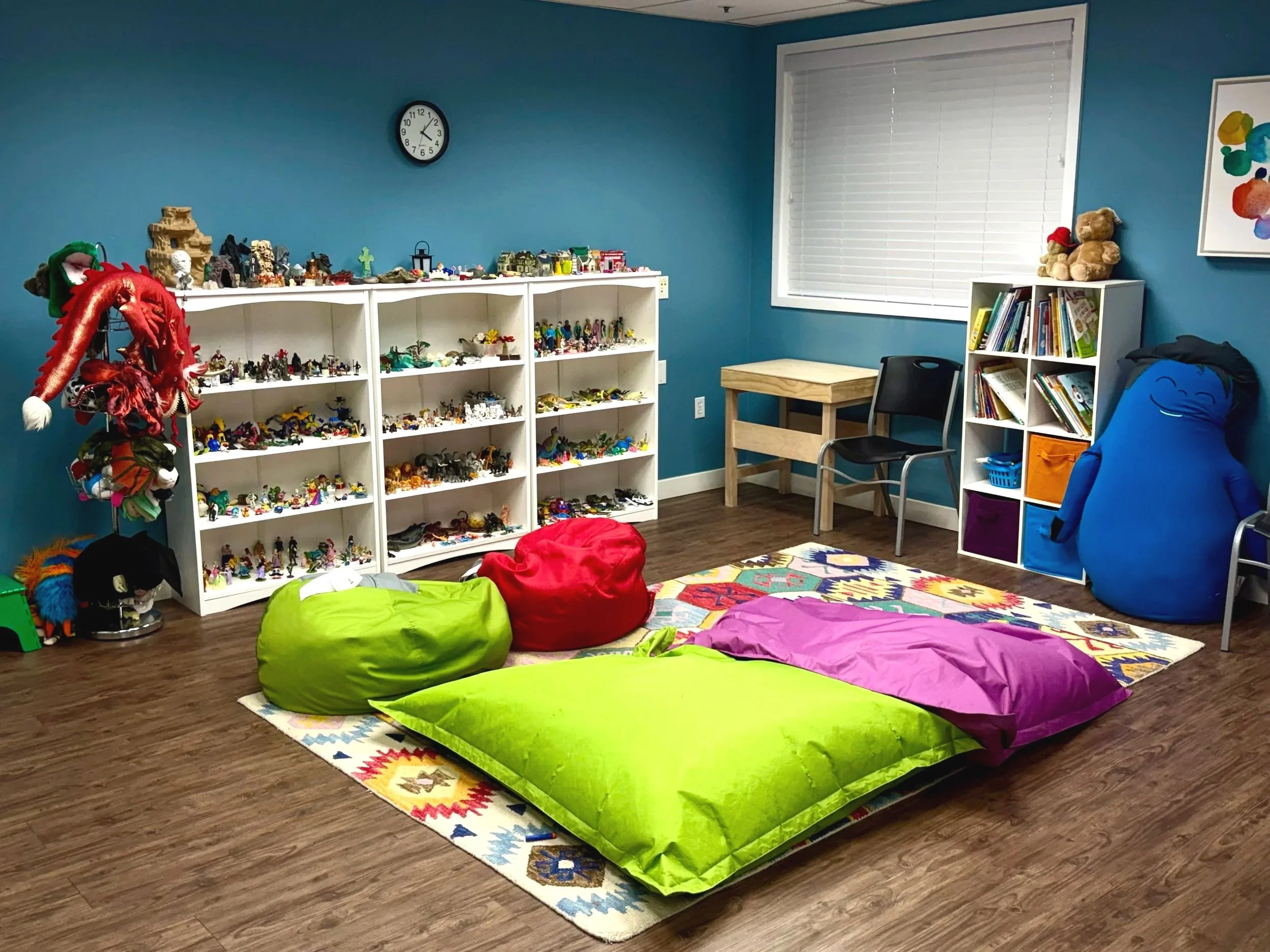
Much of what happens in a play therapy session depends on both the client’s needs and the therapist's theoretical approach but here is a general idea of what to expect.
Your Child Chooses What to Play
Just like in talk therapy where an adult might choose what to discuss, a child uses play to guide what is explored.
For example, a child who is struggling with belonging might not tell the therapist, “I feel left out.” Instead, they might create a story about a fox who doesn’t know whether he belongs with the cats or the dogs. Through that story, the child is expressing something deeply personal.
The Therapist Gently Supports Growth
There also are times when the therapist might guide the child in a specific activity to help the child learn crucial life skills or may provide an activity that helps the therapist and child learn more about themself.
Depending on the therapeutic approach, the therapist may:
Introduce coping skills
Help problem-solve within the play
Encourage new ways of responding
Reinforce emotional regulation
This is done carefully and intentionally. The goal is not to control the play, but to support the child in a way that feels safe, not pressured or judged.
The Therapist Observes and Reflects
The therapist observes patterns, themes, and emotional cues, and they respond in ways that help the child feel understood. You might hear statements like:
“That felt really scary.”
“You worked hard to fix that.”
“It looks like you’re feeling frustrated.”
These reflections help children begin to recognize and name their emotions, which is an important step in developing emotional awareness and regulation.
Is It Like a Play Date?
Just like adults talk through problems in therapy, children “play through” theirs with the support of someone trained to help them make sense of those experiences.
In a play date:
There’s little structure or therapeutic intention
No one is tracking emotional themes or patterns
The goal is fun and socialization
In play therapy:
Toys are intentionally selected
The therapist is trained to recognize patterns in play
Interactions support emotional growth
The goal is healing not just entertainment
Can My Child Just Play at Home Instead?
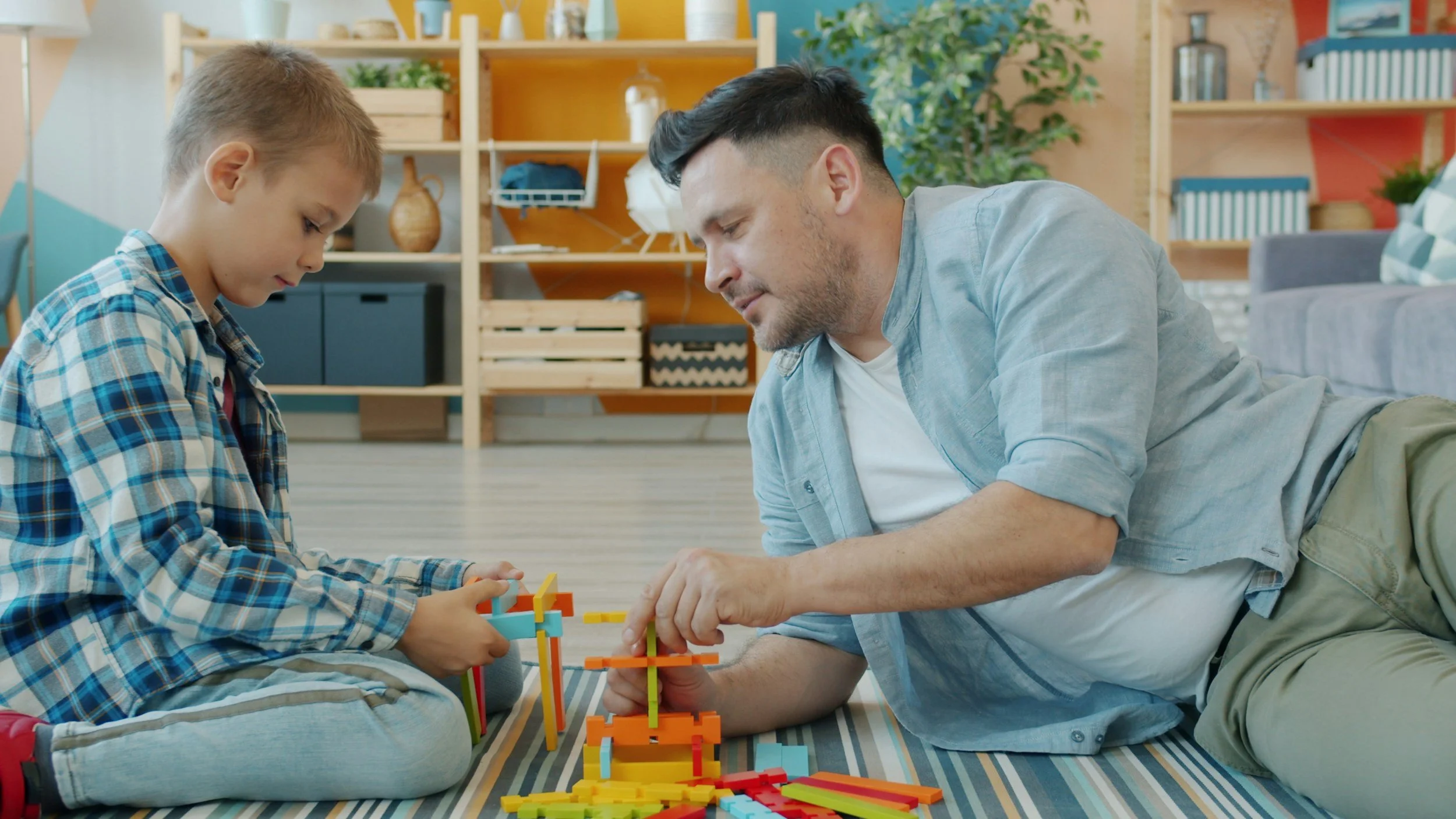
Playing at home is incredibly valuable and it’s something you should absolutely continue to encourage. However, play at home and play therapy serve different purposes, similar to how talking with friends and family and talk therapy serve different purposes.
At home people have different roles and rules. Parents are often setting limits, managing routines, solving problems, and guiding behavior. Even in the most supportive environments, it’s difficult to step out of that role completely.
In play therapy, the therapist's role is one that is fully focused on understanding your child’s emotional world. A trained play therapist creates a safe, supportive environment and looks for patterns and themes in a child’s play that may not be immediately obvious.
It is this specialized training and therapeutic presence that makes play therapy different from playing at home. The Association for Play Therapy explains that play therapy is an evidence-based practice that helps children improve emotional well-being, behavior, and relationships.
So while play at home builds connection and supports development, play therapy adds a deeper, intentional layer of healing.
How do I Know if Play Therapy is Helping my Child?

Progress in play therapy shows up in a few different ways including:
Changes in play themes (less chaos, more problem-solving) — At the beginning of therapy, a child’s play may feel disorganized, repetitive, or centered on conflict, fear, or loss of control. Over time, you may notice their stories shift. Characters begin to solve problems, find safety, or work together. These changes often reflect a growing sense of stability, confidence, and emotional healing.
Improved behavior at home or school — As children learn to understand and manage their emotions, their behavior often improves. This might look like fewer meltdowns, better cooperation, improved focus, or more positive interactions with siblings, peers, and teachers. These changes are signs that your child is developing healthier ways to cope with challenges.
Increased emotional expression — Children in play therapy become more comfortable expressing their feelings. They may begin to use words to share emotions, show affection more freely, or communicate their needs with greater clarity. Instead of acting out their distress, they learn to express it in safe and constructive ways.
Greater confidence or independence — With support and understanding, children often develop a stronger sense of self. You might notice them trying new things, making decisions more easily, or showing pride in their accomplishments. This growing confidence helps them navigate their world with resilience and a sense of security.
Progress in play therapy looks different for every child. Some changes are easy to see, while others are subtle and unfold over time. Each child’s journey is unique, shaped by their experiences, strengths, and needs.
If you ever have questions or wonder how your child is progressing, speaking directly with your child’s therapist is the best way to gain insight, clarity, and support along the way.
How Are Parents Involved in Play Therapy?

Parents are sometimes asked to join for part or all of the session, depending on what is needed and if it is individual or family therapy.
Even in individual play therapy — where it is just with the child — parents are still a crucial part of your child’s progress. Therapists often:
Provide updates on general themes and progress.
Offer strategies to support your child at home.
Help you better understand your child’s behaviors.
In places like Utah, where many families are actively seeking support for children’s emotional and behavioral needs, this collaborative approach between therapist and parent is especially important.
Therapy isn’t just about what happens in the room, it’s about creating consistency and understanding across the child’s entire environment.
The Heart of It All

At its core, play therapy is about connection.
When a child feels seen, understood, and accepted, they gain the courage to explore their world differently. Through play, they don’t just express pain; they rehearse healing.
And in that process, growth happens naturally.
Begin Your Child’s Healing Journey
If you’re considering play therapy for your child, you don’t have to navigate the process alone. At Wasatch Family Therapy, our compassionate team is dedicated to helping children and families feel understood, supported, and empowered. Through a safe and nurturing environment, we help children express themselves, build resilience, and develop the skills they need to thrive.
Working with Benjamin Anderson means partnering with a therapist who brings warmth, insight, and a deep respect for each child’s unique story. Benjamin creates a space where children feel safe to explore their emotions through play, while also collaborating closely with parents to support meaningful and lasting growth.
Wasatch Family Therapy is proud to offer robust, evidence-based play therapy services supported by expert supervision and mentorship from Clair Mellenthin. Clair is a nationally recognized leader in the field, a Registered Play Therapist-Supervisor™, author, and educator who has trained clinicians around the world. Her guidance ensures that our therapists provide the highest quality care grounded in best practices and the latest research in play therapy.
If you’re ready to learn more, we invite you to connect with our team. Together, we can help your child feel seen, supported, and empowered to heal.